UX Research
IOS Mobile
Your family has probably already talked about death, but probably not as deeply as they would like.
UX Research · Accessibility
Role
UX Researcher
Team
3 researchers, 1 product manager
SKILLS
User Research, 0 to 1 Development, Design Systems, Product Design
Duration
10 weeks

THE PROBLEM
"We did get on, like, a life insurance plan. But we only talked about, like, the insurance itself… not the reasons behind it."
— Participant 1, user interview
80%
had talked about death or legacy — but stayed on logistics: wills, insurance, funeral arrangements. Not the reasons behind them.
55%
called it "difficult but meaningful" — people want these conversations. The problem isn't willingness. It's knowing how to go deeper.
44%
DESIGN PROBLEM
The problem isn't avoidance. It's depth.
We started this project assuming families weren't talking at all. Our research proved us wrong — and sharpened the real problem. Most families had already had these conversations. But they covered the paperwork, not the person. Interviews revealed that meaningful conversations tended to happen only after a crisis — a death, a diagnosis, a health scare. Outside those moments, families defaulted to surface-level logistics or avoided the topic entirely. Young adults wanted to go deeper. They just didn't know how — or when — to start.
How might we help prepare young adults for future conversations about death and legacy with their parents?
Solution
Connecting families through a virtual guidance.
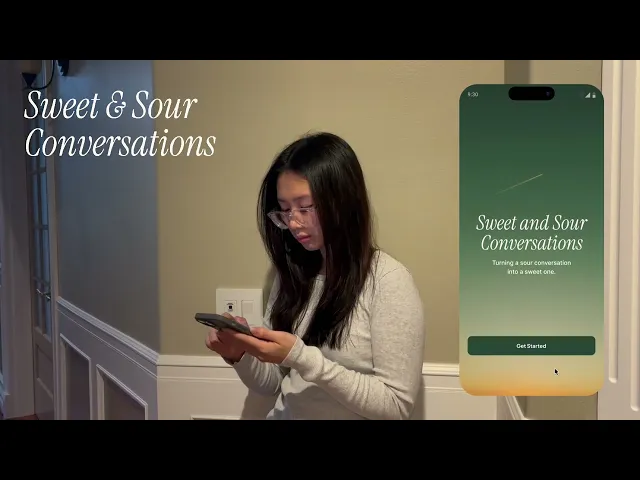
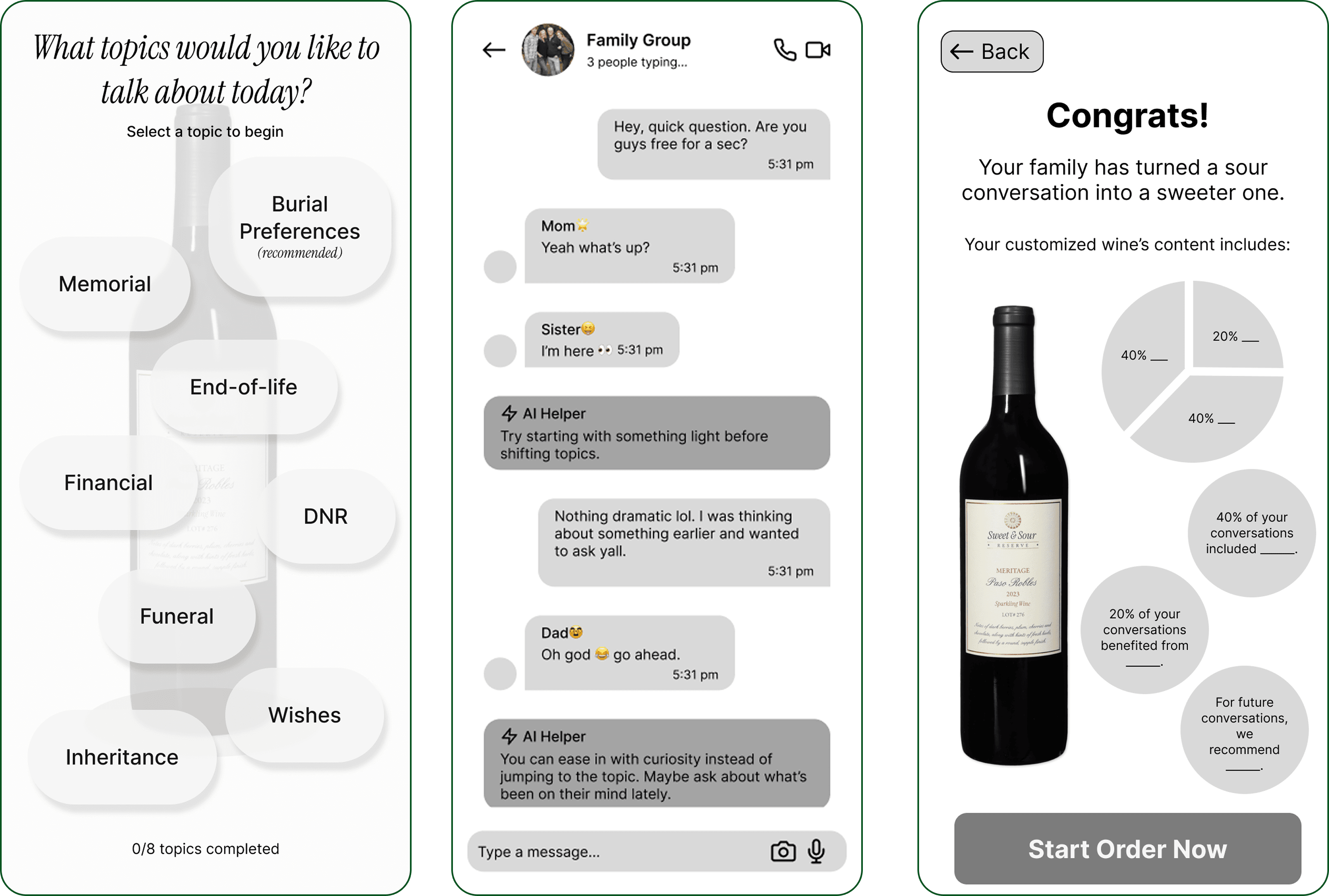
Sweet and Sour Conversations is a virtual platform that provides users with personalized guidance and pre-conversation preparation for future conversations about death and legacy.
RESEEARCH
First assumption was proven wrong.
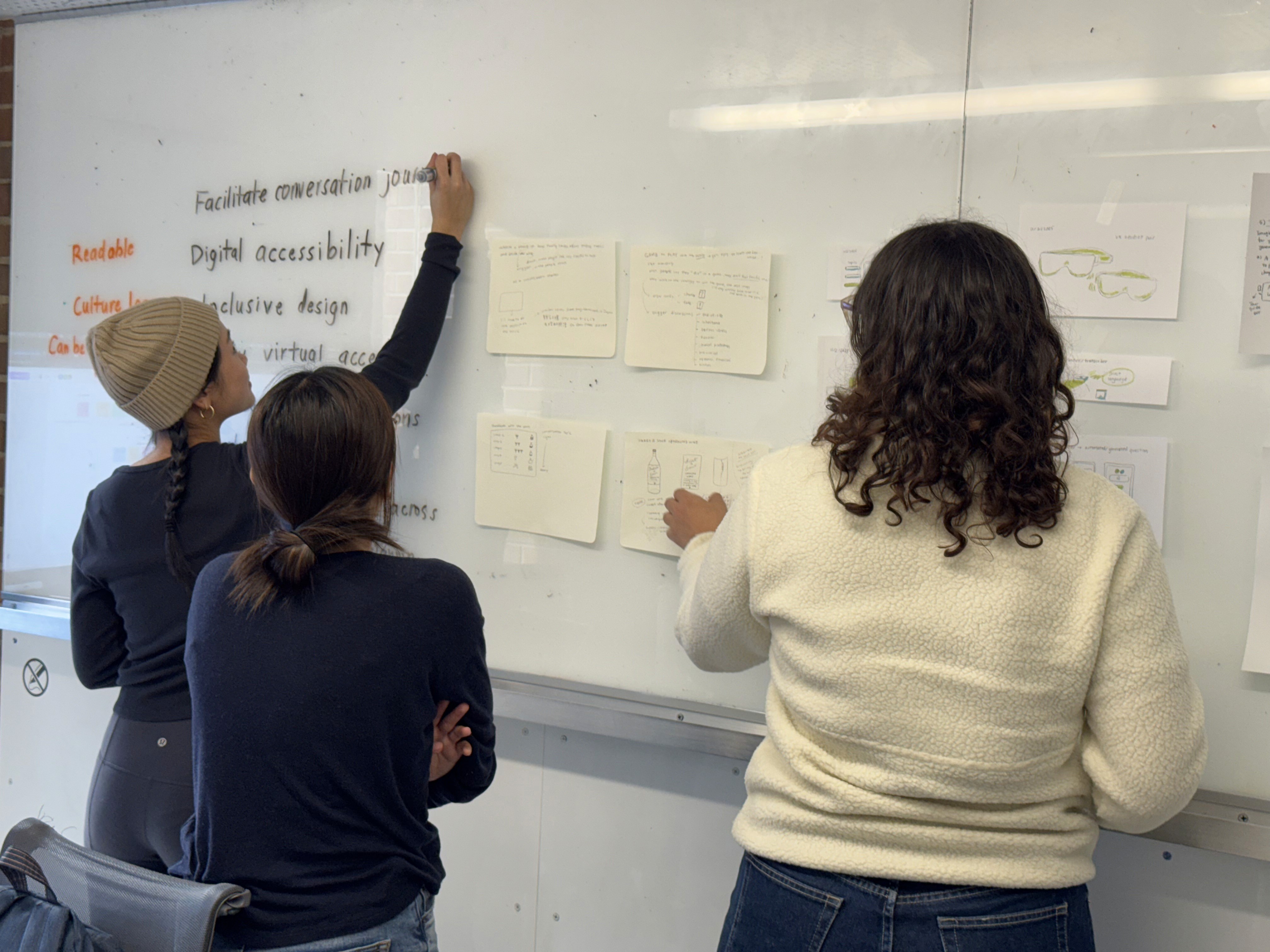
When we started this project, we assumed people avoided talking about death. We were wrong. Survey (n=25), semi-structured interviews (n=5), and secondary research on birth order, religion, and family communication patterns forced us to rethink the problem entirely.
Finding 01
Conversations happen, but vary in depth and purpose.
"The insurance itself… not the reasons behind it." — P1
Finding 02
Emotional openness is situational and often triggered by external events.
"We had multiple deaths back to back… we would all cry together." — P4
Finding 03
Comfort depends on family norms and communication style.
"Even with my mom, we didn't really talk about specifics too much." — P5
Finding 04
Birth order controls who speaks
"You're oldest. You make the decisions. But you're not telling us what you want." — Su et al., 2014
Finding 05
Religion can impact the way people perceive death and legacy.
Religion can help people understand the world around them and through the uncertainty of death.
PERSONAS

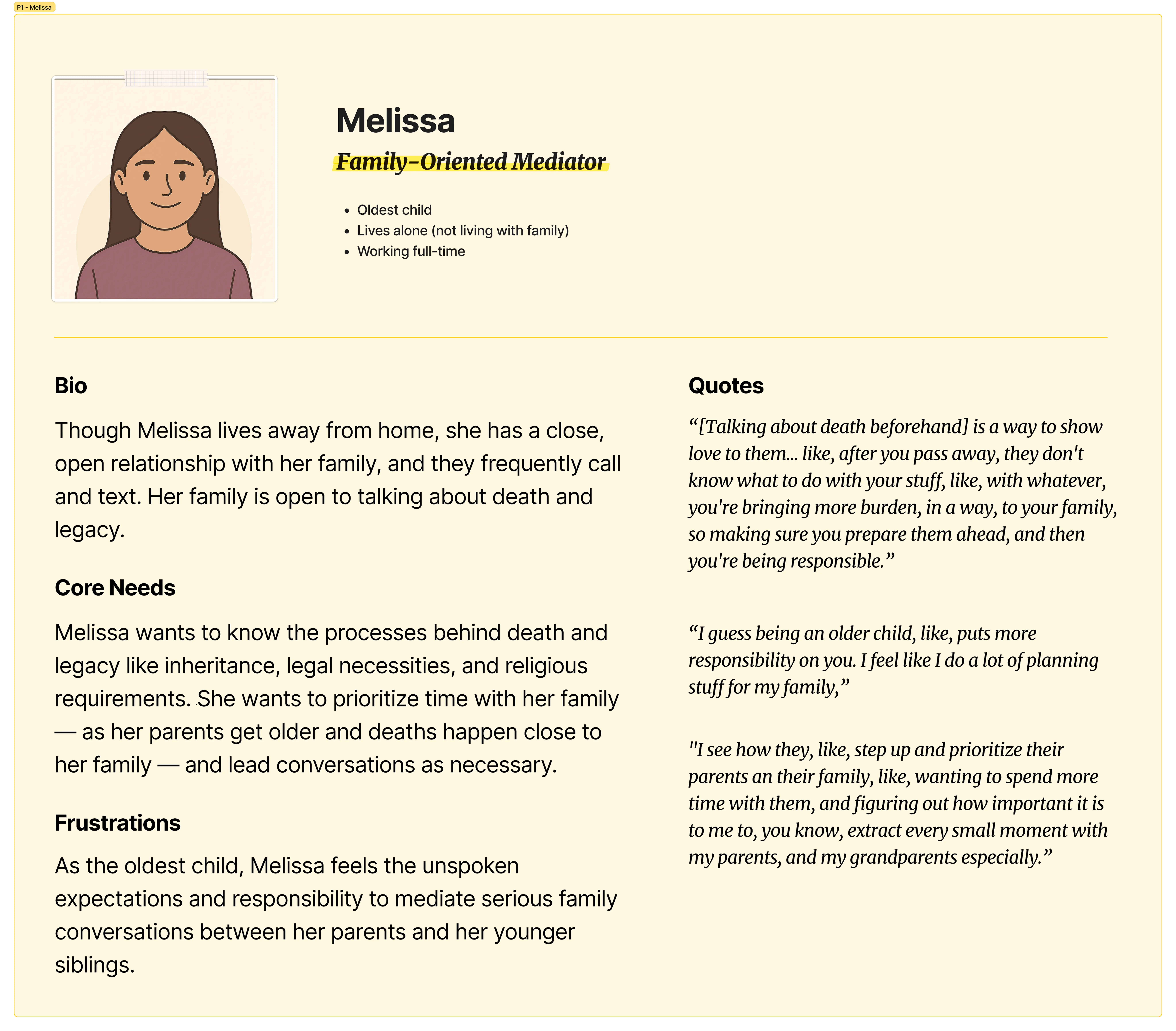
Two people. Different barriers.
Ideation
Designing the first concept.
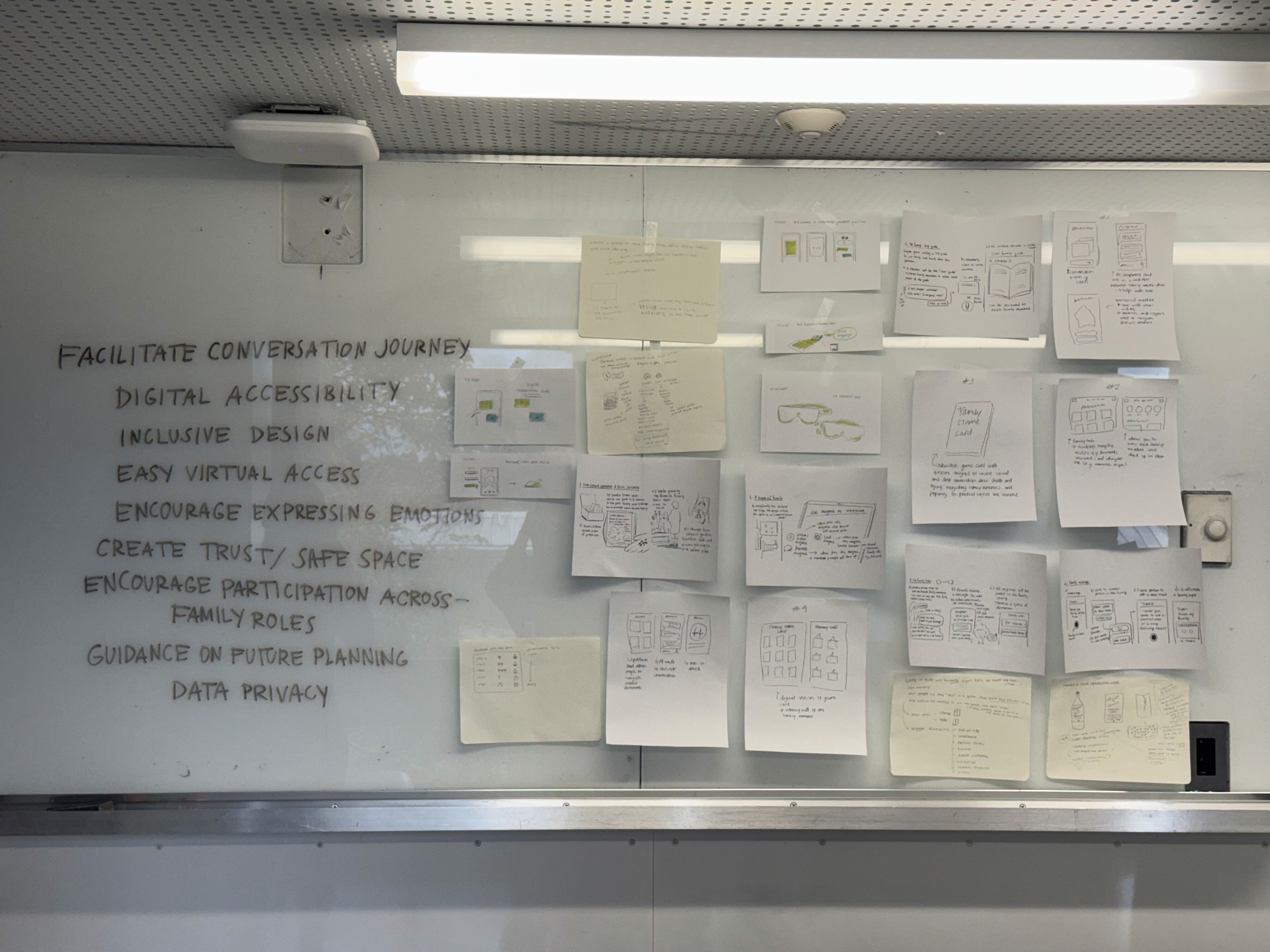
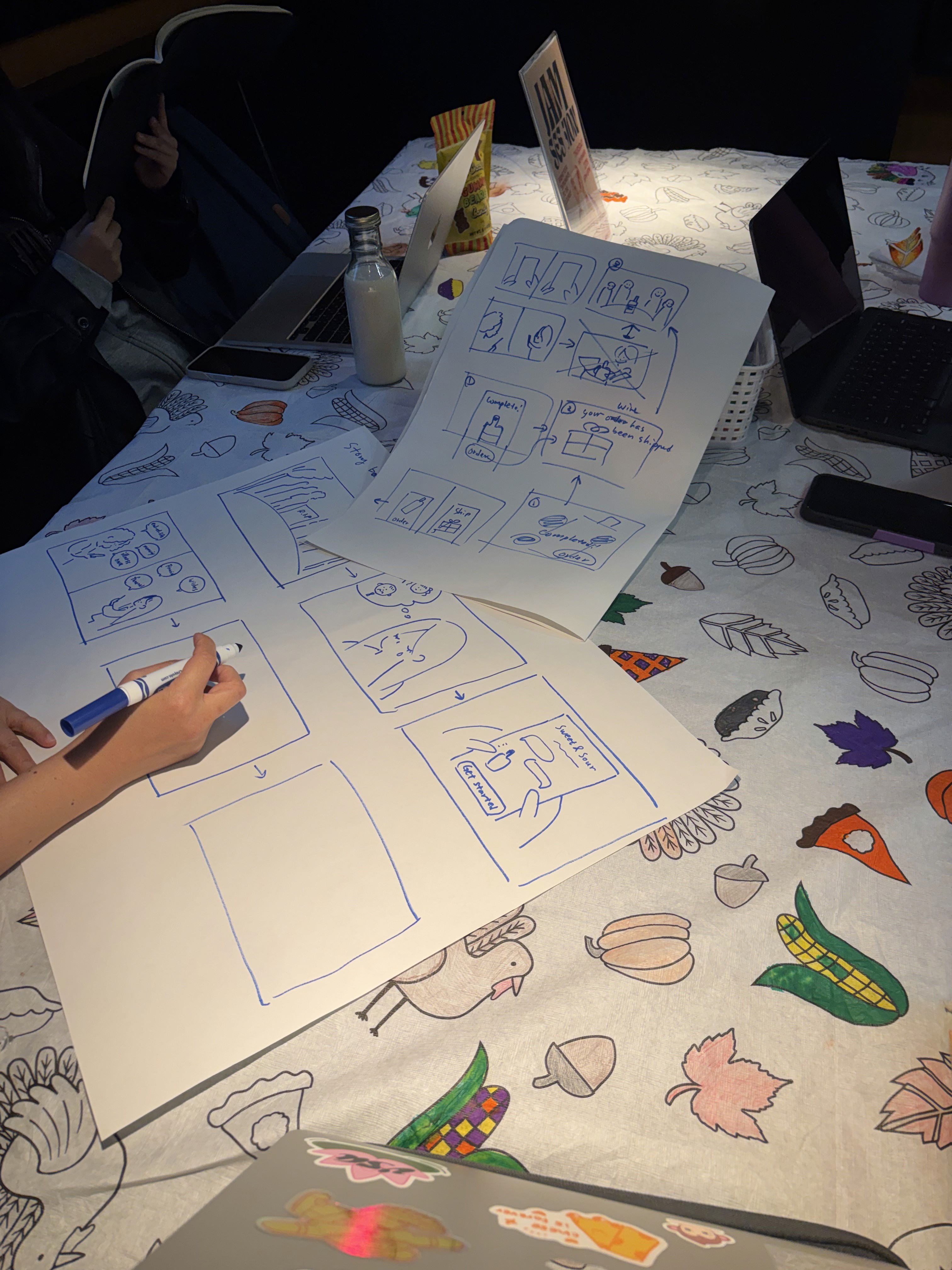
We addressed Melissa and Charlie’s needs using a wine fermentation metaphor. This concept encourages families who are living apart to participate in difficult conversations about death and legacy and provides an incentive through a physical customized wine/beverage. This was presented during an in-class peer review.
THE PIVOT
"I just want to learn how to have the discussion directly."
— P1, usability testing. This quote killed our recipe feature and sharpened the whole product.
DESIGN QUESTION EVOLUTION
Week 2 — Before research
"…when a family member tends to avoid these topics?"
We assumed avoidance was the core barrier.
Week 5 — After survey + interviews
"…within families who already engage in these discussions?"
80% had already talked. The gap was depth, not initiation.
Week 8 — After usability testing — Final
How might we help prepare young adults for future conversations about death and legacy with their parents?
Users didn't want activity planning. They wanted to learn how to have the conversation directly.