sweet & sour
concept
Helping young adults prepare for future discussions navigating death and legacy with their parents, turning a possibly sour conversation into a sweet one.
overview
research
design
solution
reflection
TIMELINE
Sep 2025 - Dec 2025
ROLE
UX/UI Designer
TEAM
1 Product Manager
3 UX/UI Designers
DISCIPLINES
UX Research
Prototyping
OVERVIEW
Death is an inevitable experience that every family will encounter one day, but there can be resistance surrounding communication around death and legacy.
We started this project assuming families weren't talking at all. Our research proved us wrong — and sharpened the real problem. Most families had already had these conversations. But they covered the paperwork, not the person. Young adults wanted to go deeper. They just didn't know how, or when, to start.
How might we help prepare young adults for future conversations about death and legacy with their parents?
solution
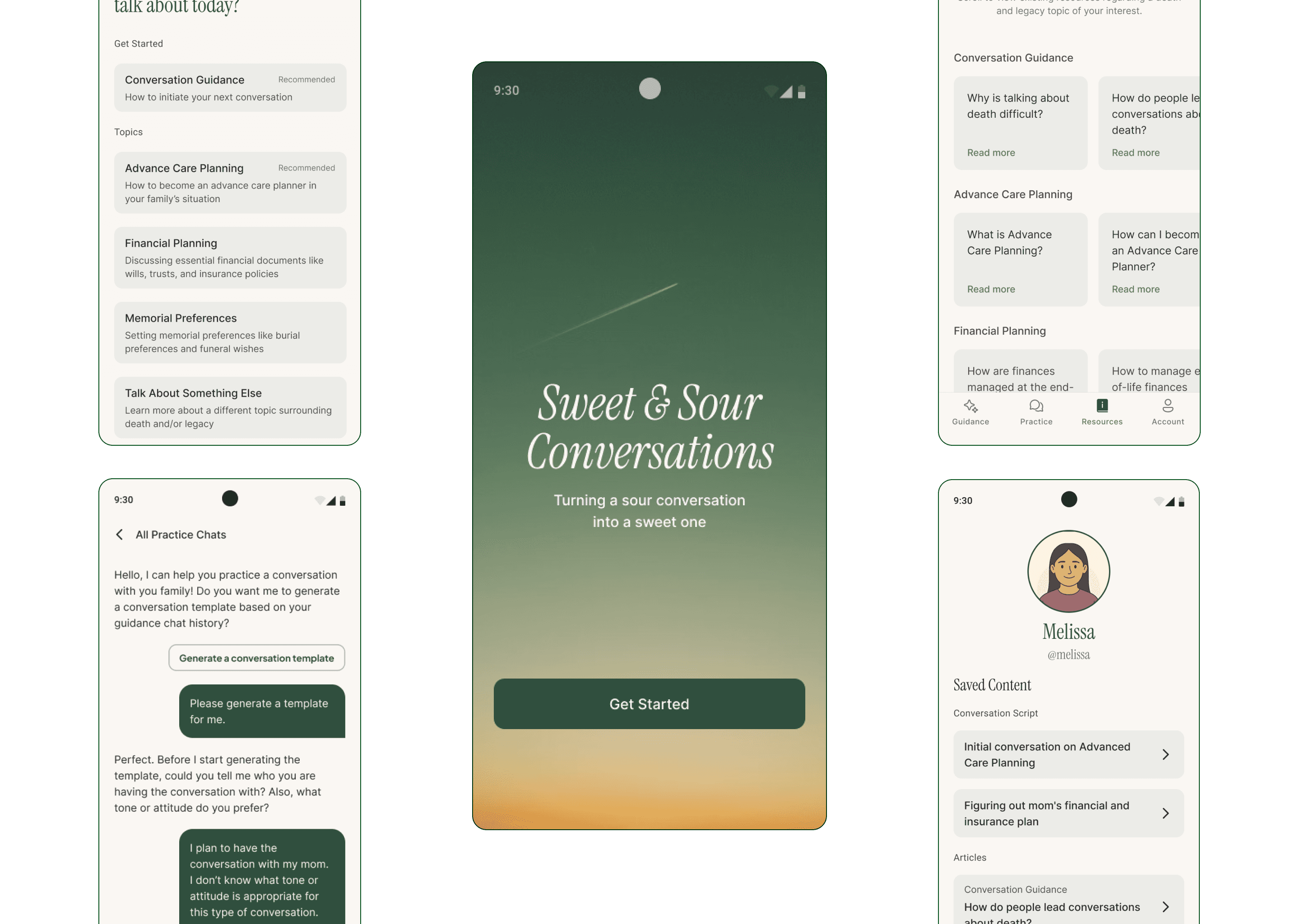
Sweet and Sour Conversations is a virtual platform that provides users with personalized guidance and pre-conversation preparation for future conversations about death and legacy.
research
Defining our problem
01
User Surveys
20 participants obtained through word of mouth and shared communities
02
User Interviews
5 participants across Zoom. Recruited through university channels
03
Secondary research
Collected through research papers on death and family dynamics
04
Usability Test & Critique
Many pivots after listening to feedback!
Initial findings
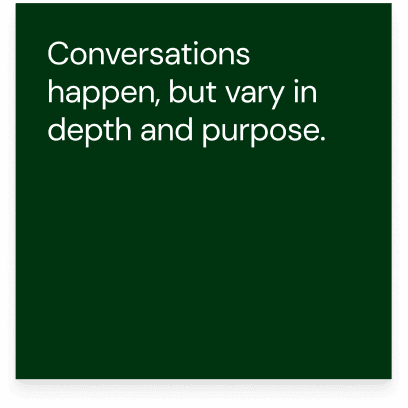
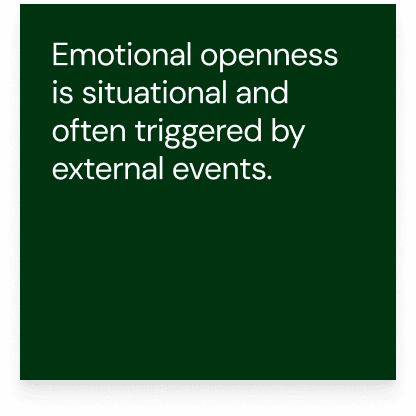
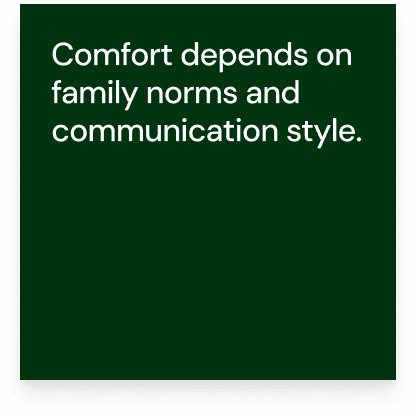
Four research methods revealed that family conversations about death tend to be practical rather than emotional, triggered by crises, and shaped by family norms, birth order, and religion.
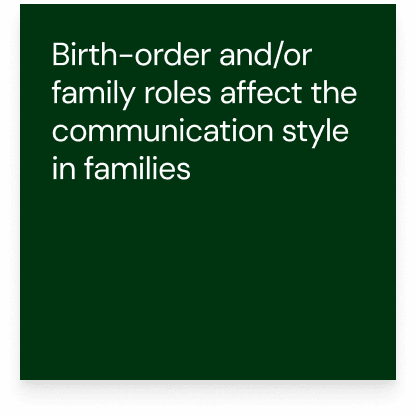


synthesized across google sheets, forms,
and figma whiteboarding
design
Exploring different solutions
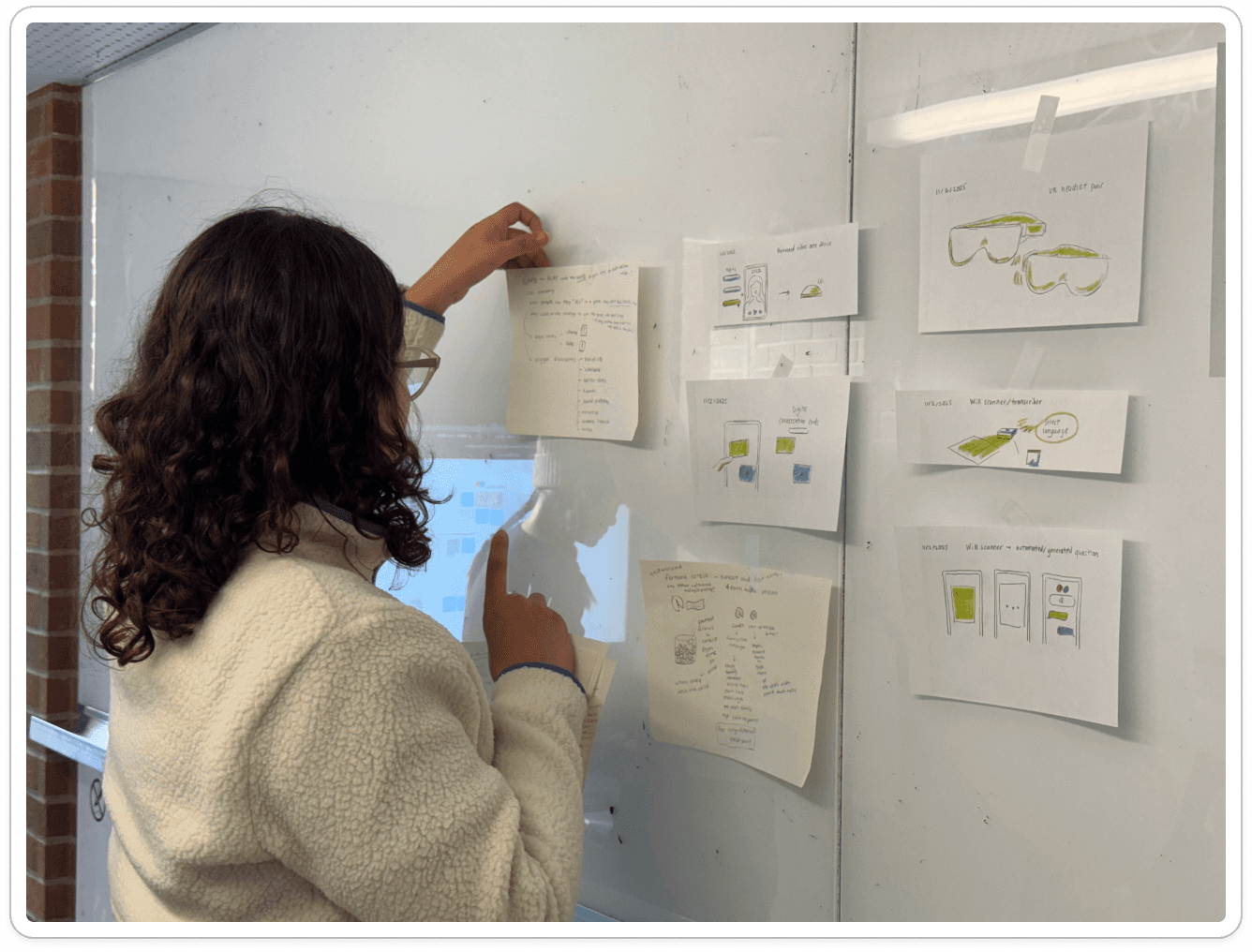
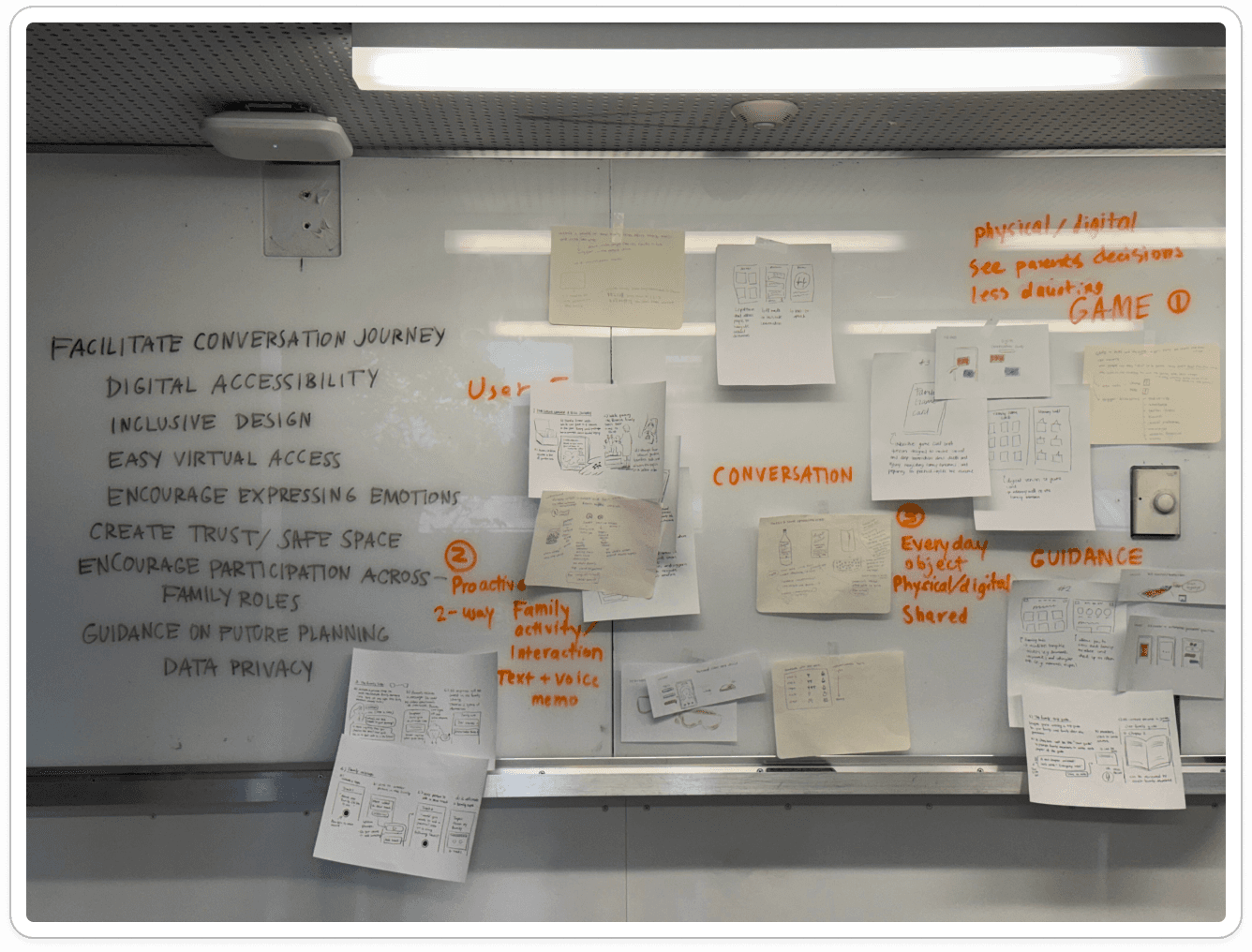
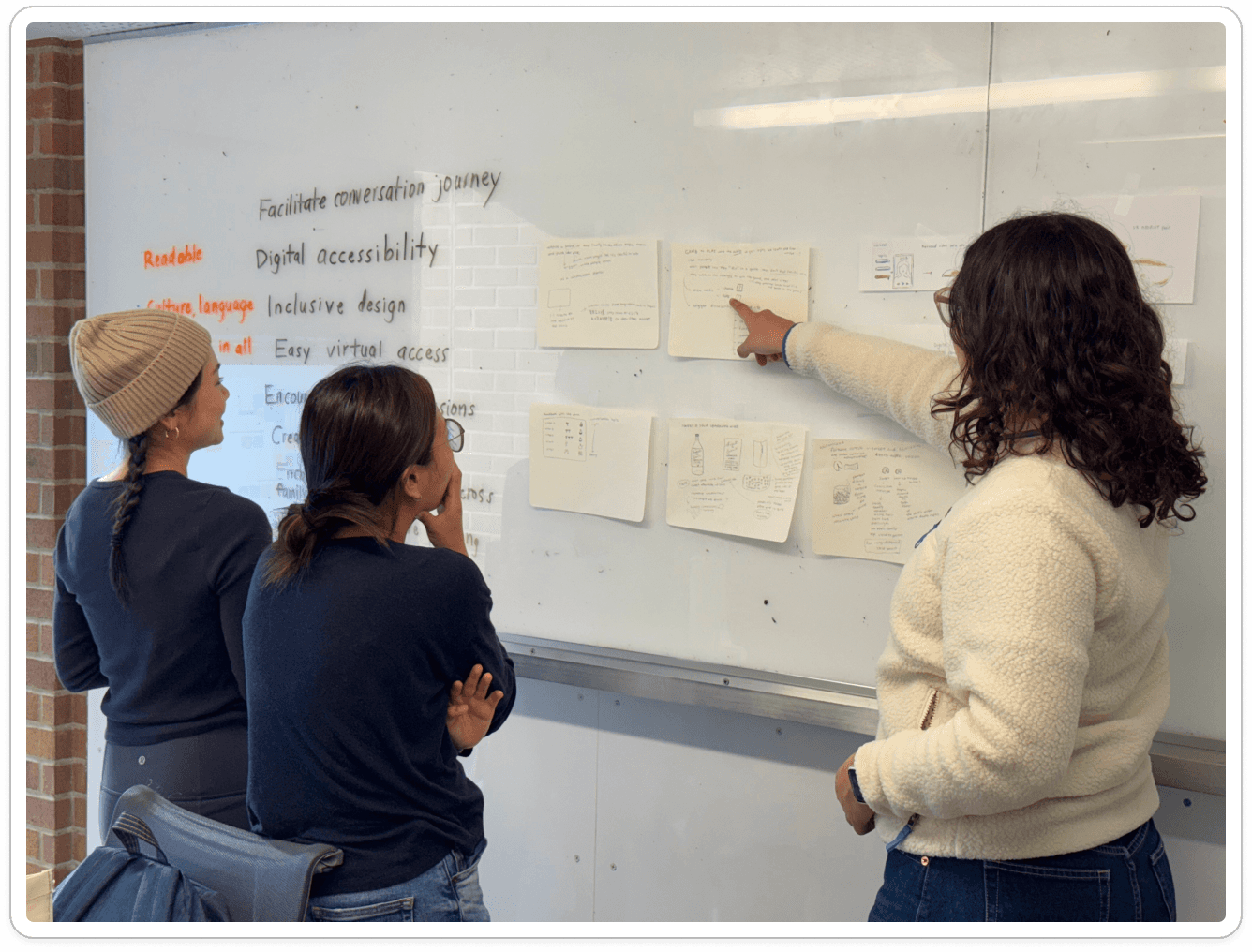
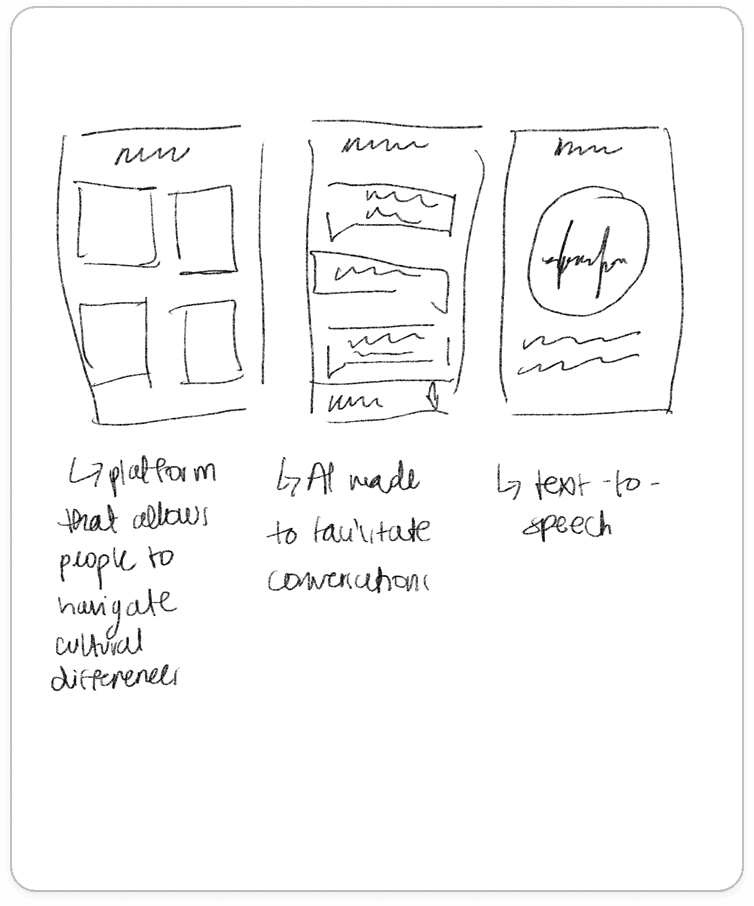
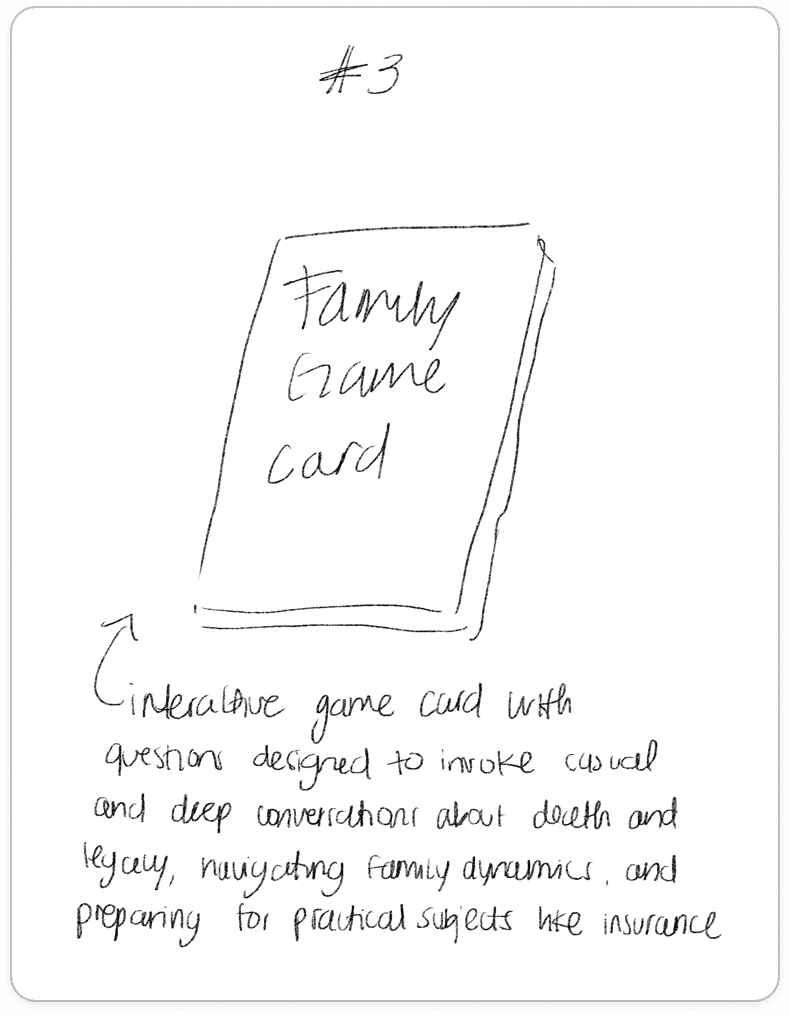
When we first started coming up with ideas of solutions, we explored the concept of doing family activities (like games) to facilitate these conversations.

Addressing death through metaphors
This concept encourages families who are living apart to participate in difficult conversations about death and legacy and provides an incentive through a physical customized wine/beverage.
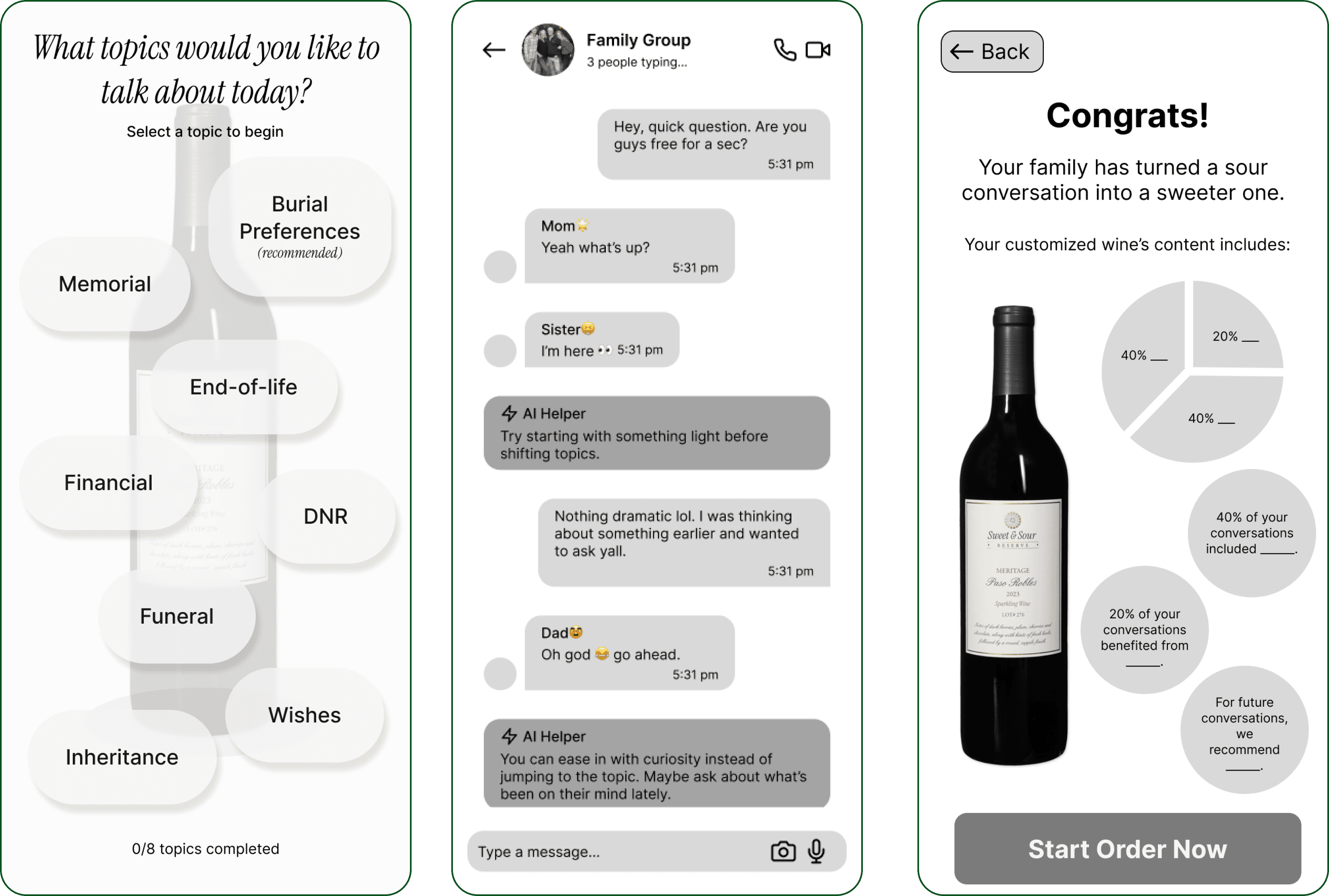
...But peer review showed that wine would not be the best incentive
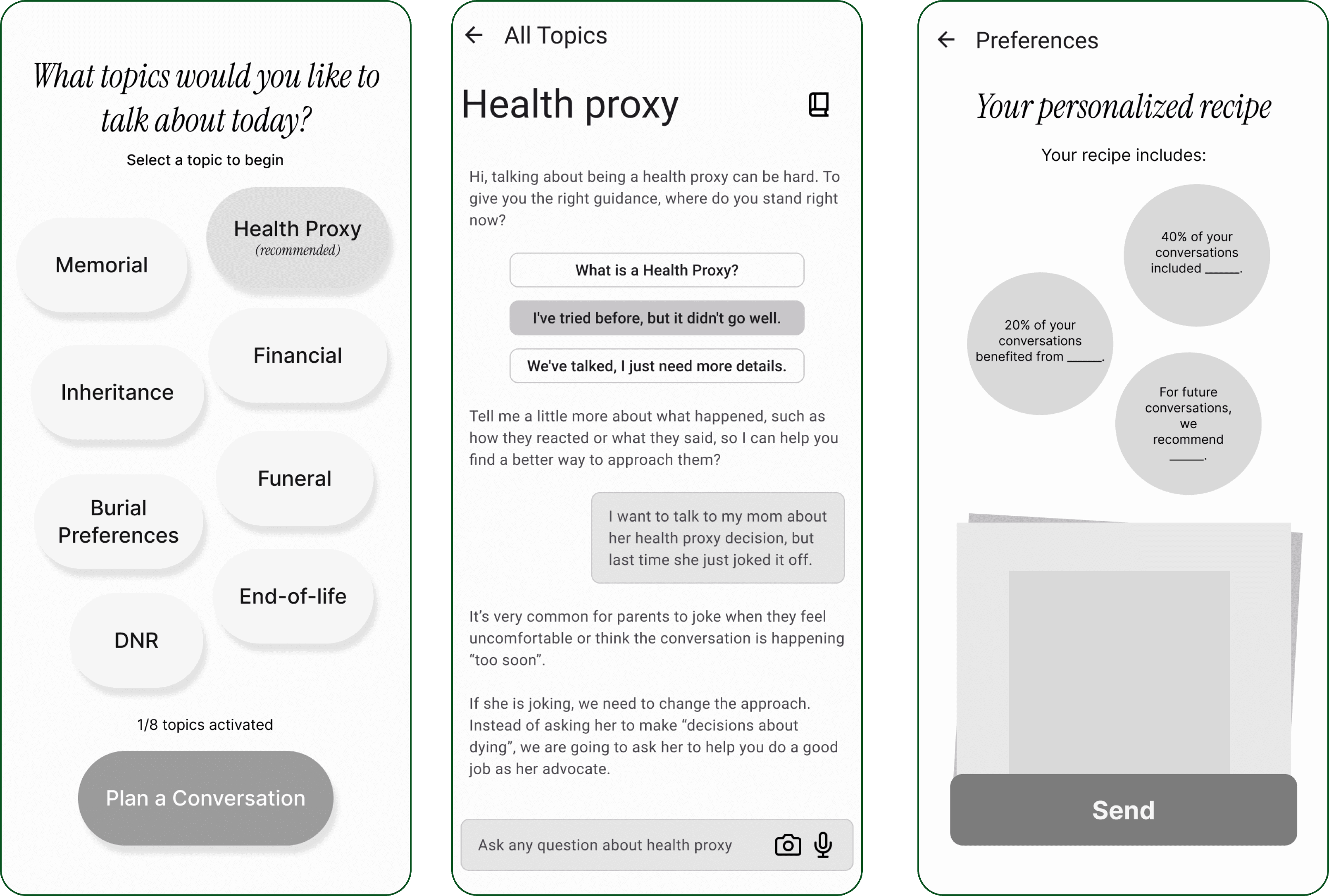
So we refined our concept to guide conversations before they happen and provide a personalized recipe (and activities) as an incentive for completion. This prototype was used during our usability testing sessions.
What testing taught us
So we refined our concept to guide conversations before they happen and provide a personalized recipe (and activities) as an incentive for completion. This prototype was used during our usability testing sessions.
01
Navigation needs clearer pathways
Users had trouble moving between pages and wanted more obvious entry points to core features
02
Topic guidance is essential
Starting a conversation felt easy, but users needed more prompting around what topic to actually discuss
03
Two types of learners emerged
Some users preferred AI-guided chat, others wanted to browse the resource hub — both pathways mattered
04
Trust is a barrier for AI features
Users understood what the AI was doing, but raised concerns about privacy and reliability.
05
Our biggest pivot: activities missed the point
The "Plan a Conversation" option confused users — they wanted help with conversation content, not family activities.
Design decisions
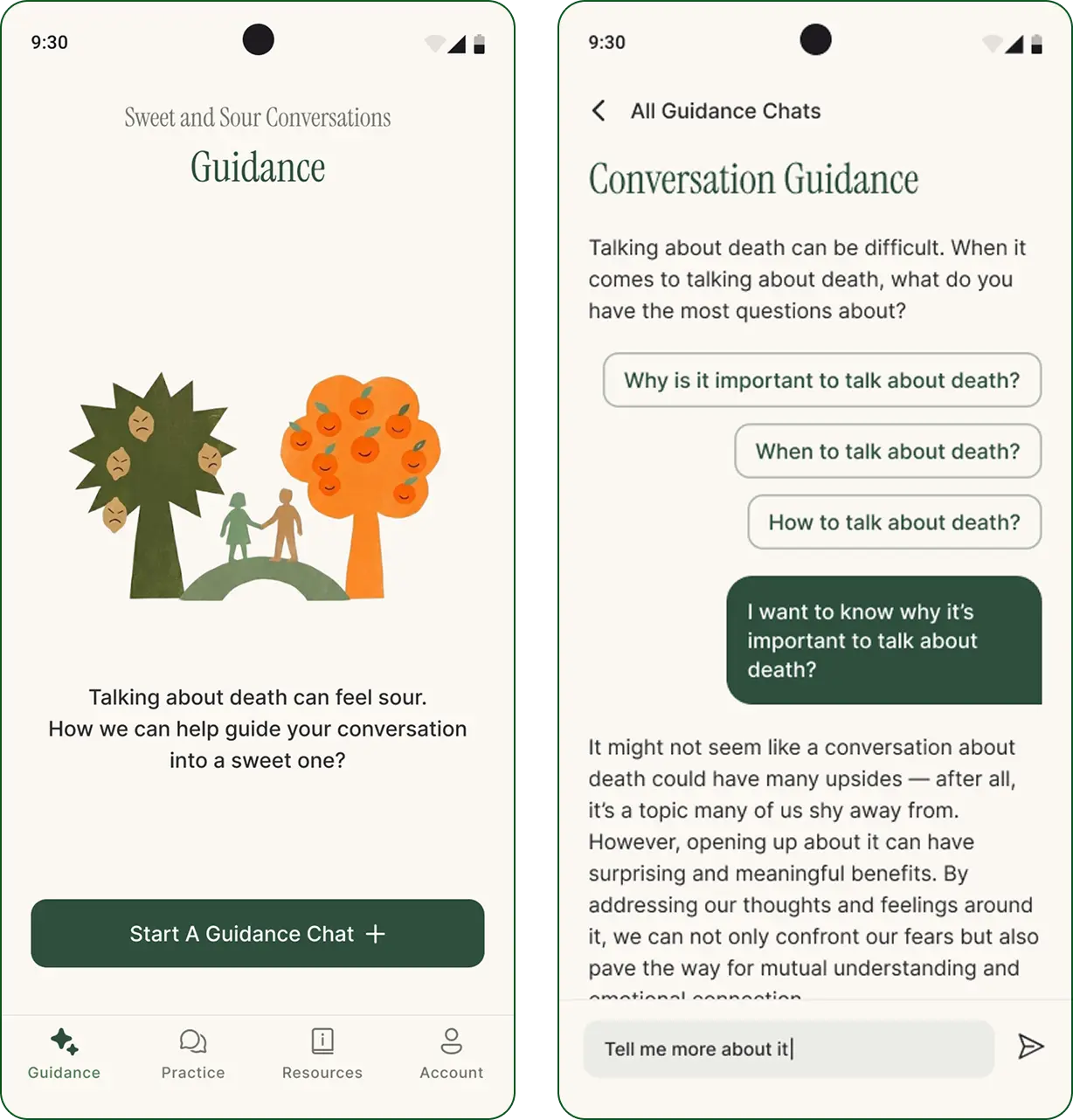
Conversation Guidance &
Digital Platform
80% of survey participants had already discussed death and legacy with their family — but wanted to go deeper on content and tone. And since 4 out of 5 interviewees lived apart from their families, we built a virtually accessible platform to guide those conversations from anywhere.
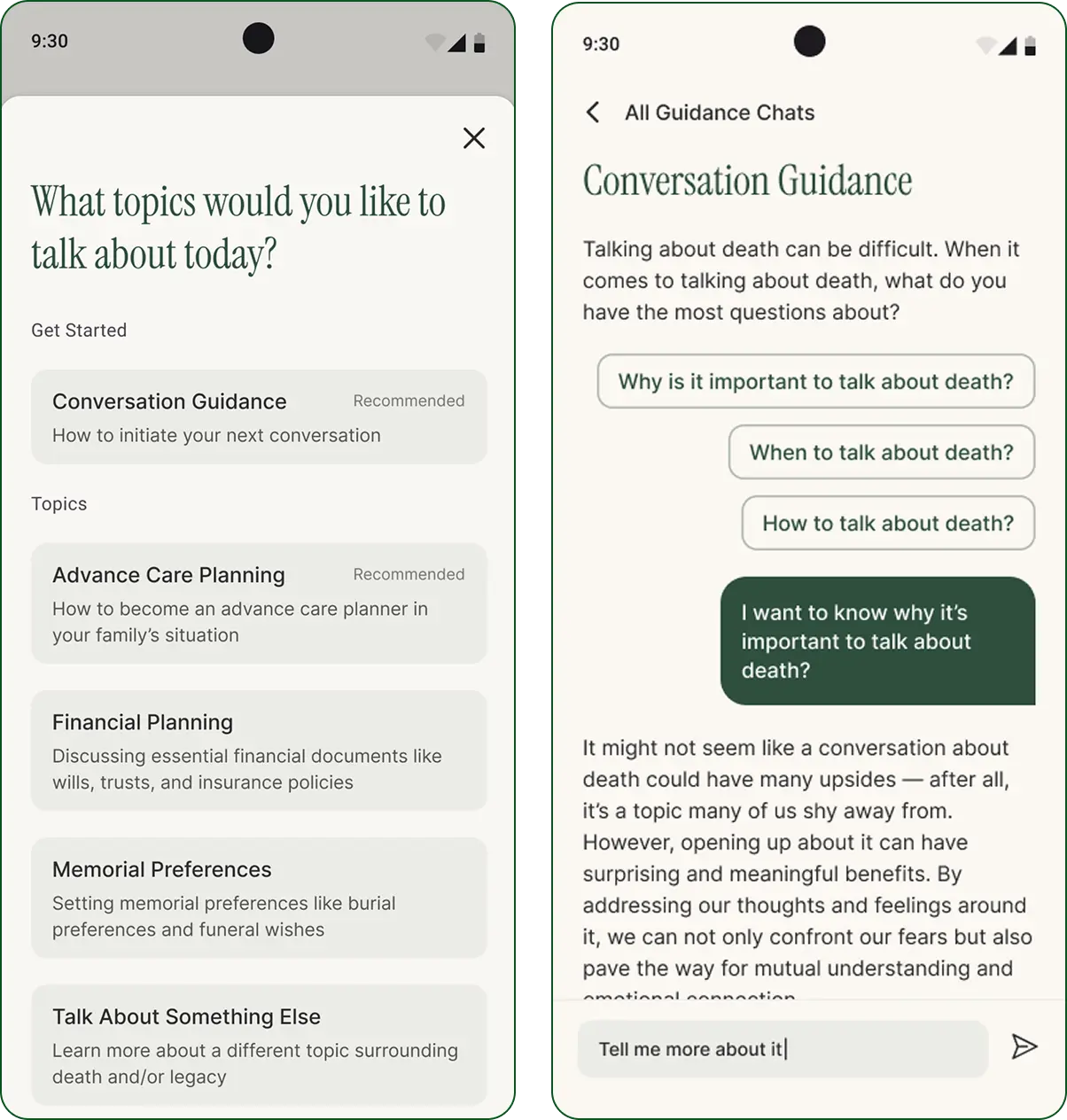
AI Guidance Chat
Survey responses and secondary research identified the most-discussed topics: advance care planning, financial planning, and memorial preferences. The guidance chat lets users explore these at their own pace before the real conversation happens.
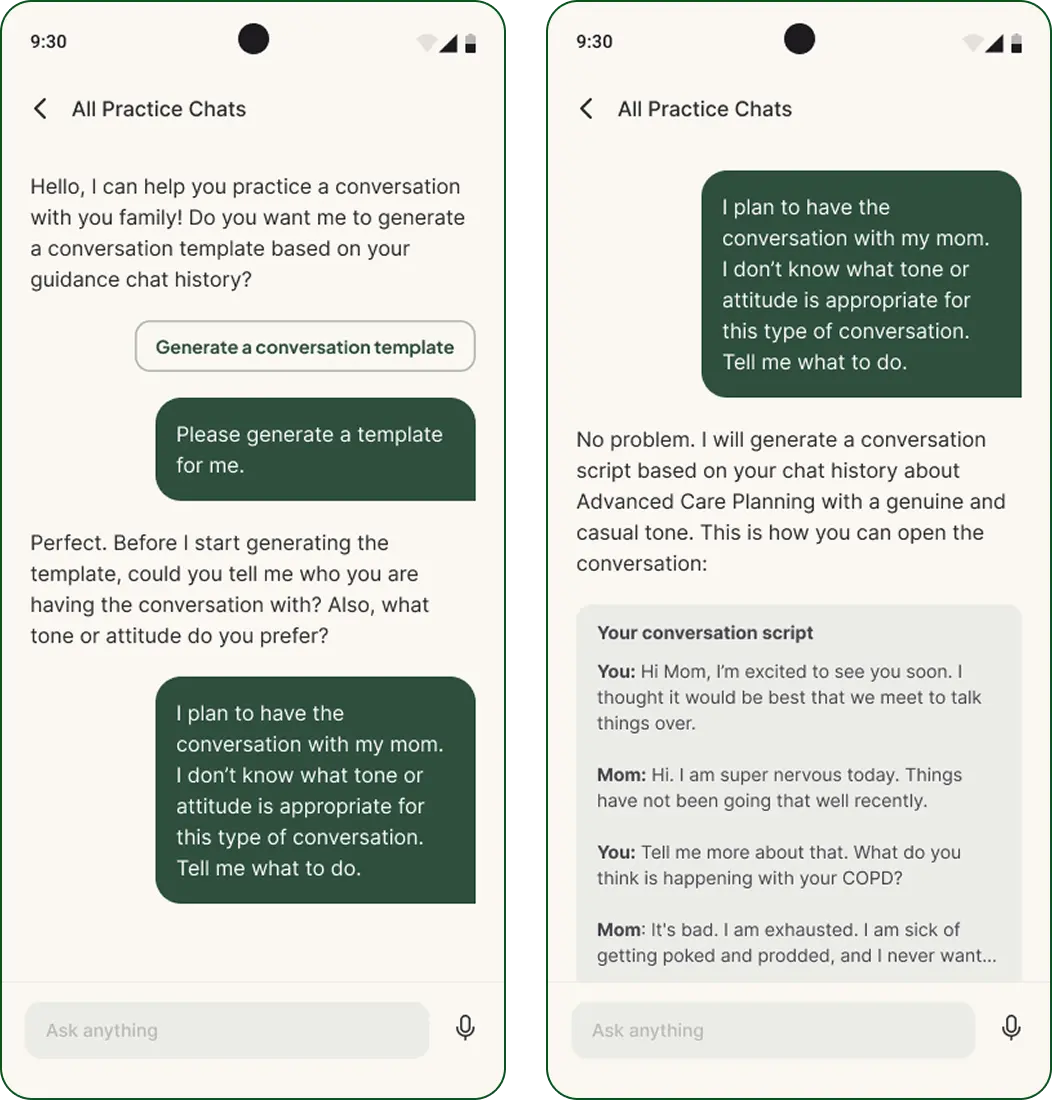
AI Practice Chat
Participants P1, P2, and P3 wanted AI responses to feel more personalized and contextual — not generic. The practice chat generates scripts tailored to the user's family dynamics, birth order, and communication style.
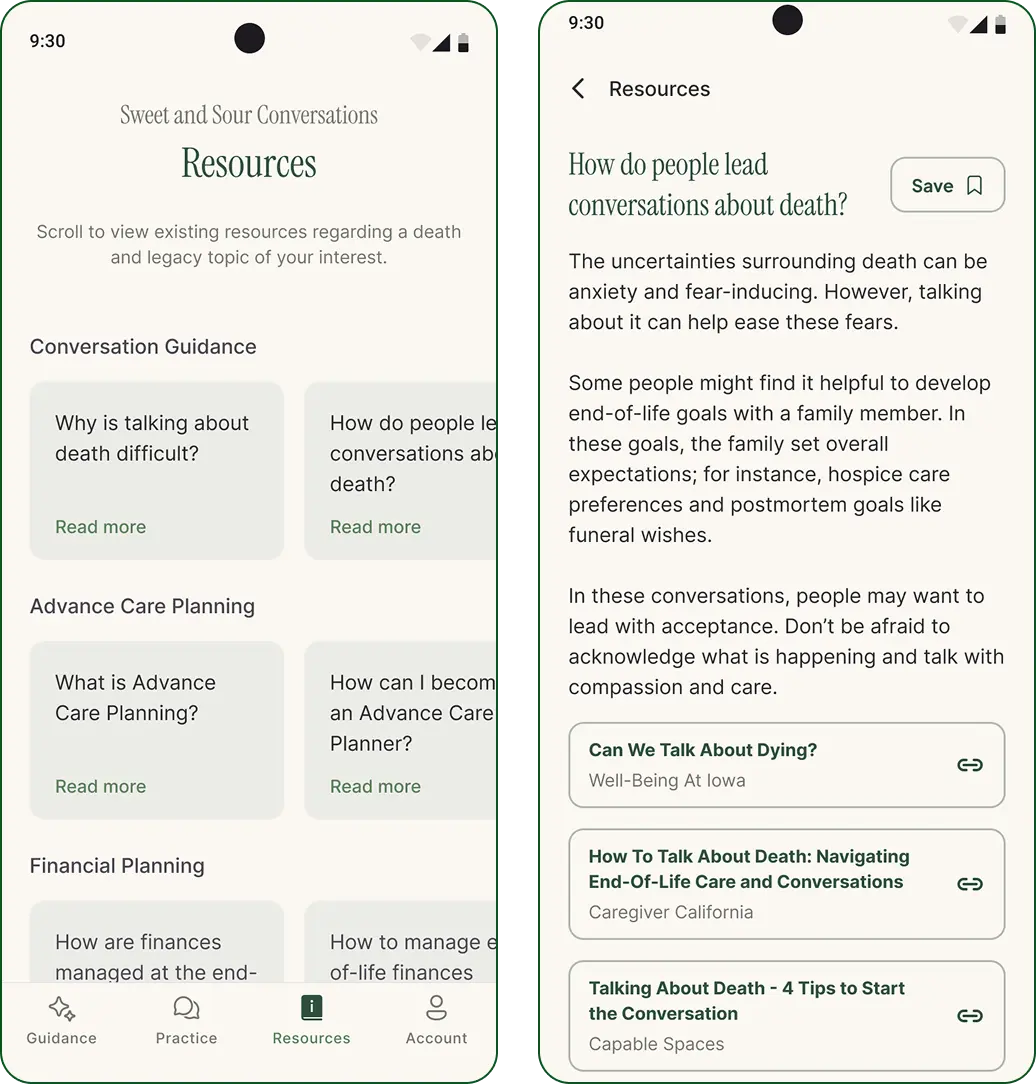
Resource Hub
Testing showed mixed preferences — some users (P1, P2) were hesitant to rely on AI for sensitive topics and preferred independent research. The resource hub gives them that option, organized around the topics most requested in our surveys.
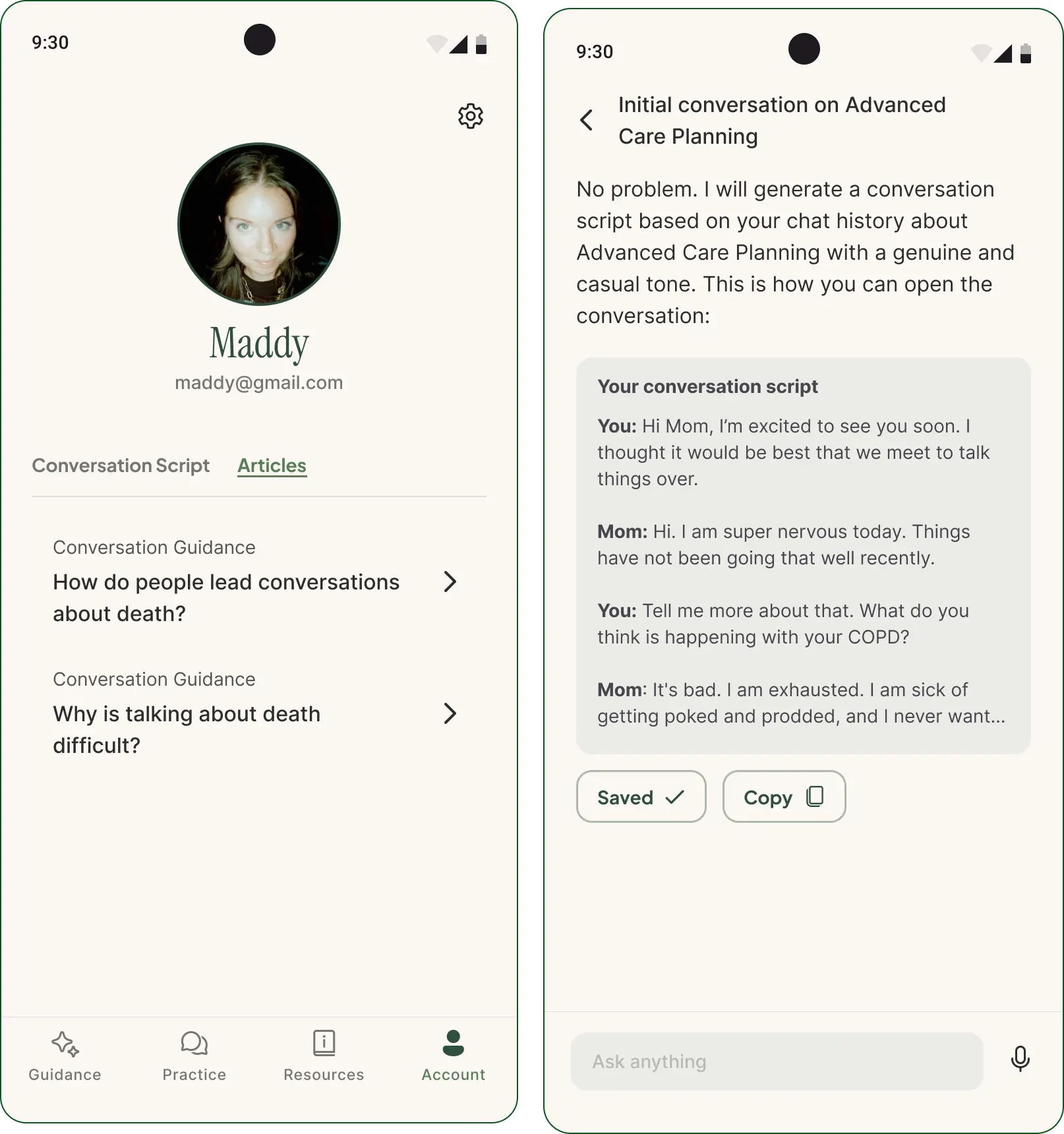
Saved Content
Meaningful conversations about death often happen in moments of crisis. The account tab lets users save chat histories and articles so they can come back to them when it matters most.
reflection
If I did this project again, I would…
Get the AI principles down
I would dedicate more time to AI design principles to ensure the product followed best practices. With topics as sensitive as death, safety and privacy concerns surfaced across all testing methods. Our number one priority would be to address this to help with adoption.
Build a rapid prototype
We bounced around ideas for a prototype LM that could simulate a conversation, but due to time constraints we could not complete this. I believe building a functional conversational prototype earlier to test for edge cases would inform stronger design decisions.